
MASTER CRASH
Rummy: gameplay, rules & questions
Indian 13-card rummy is about arranging cards into valid sequences and sets. The critical first distinction is between a pure sequence and a group that relies on a joker.
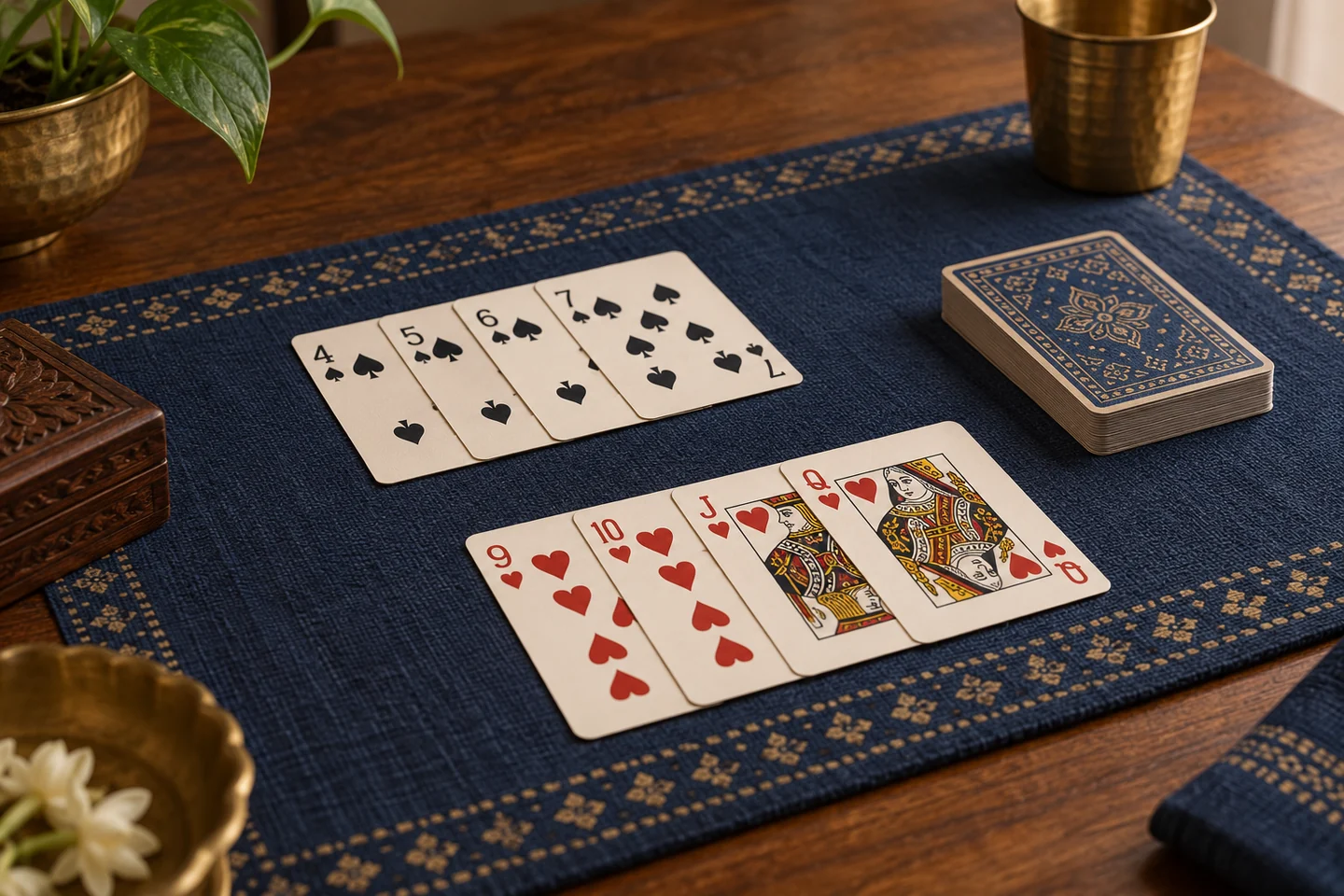
Read the table and the result
Illustrated concepts, not screenshots of the linked APK. Available games and controls must be checked in the actual app.
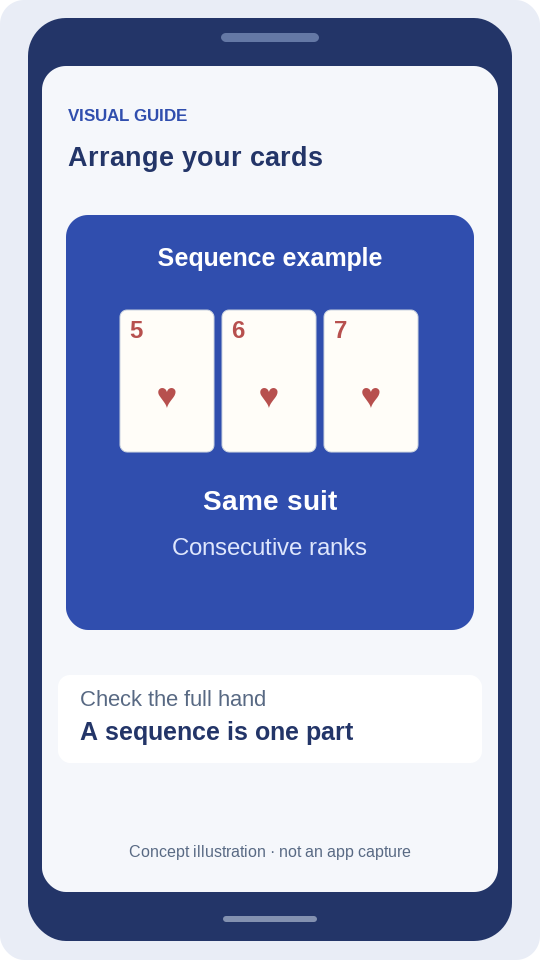
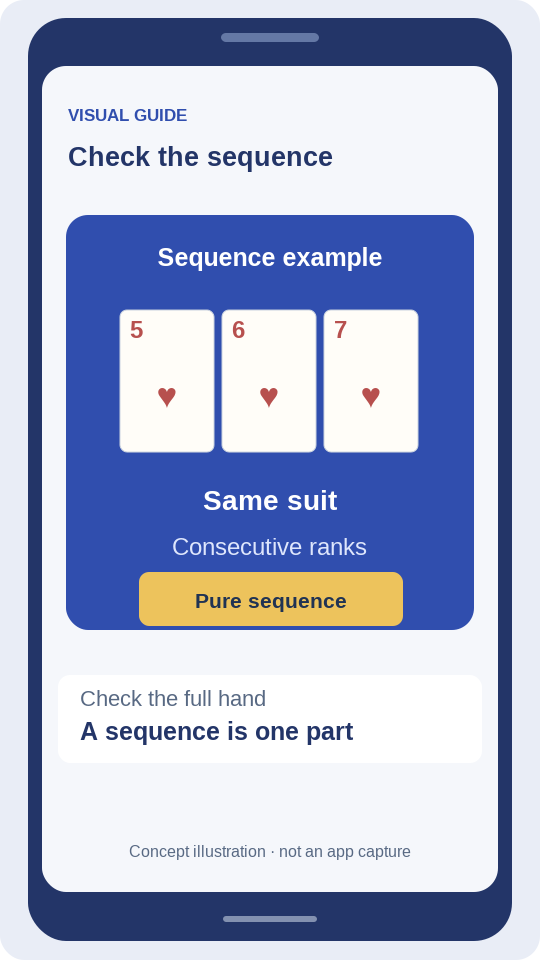
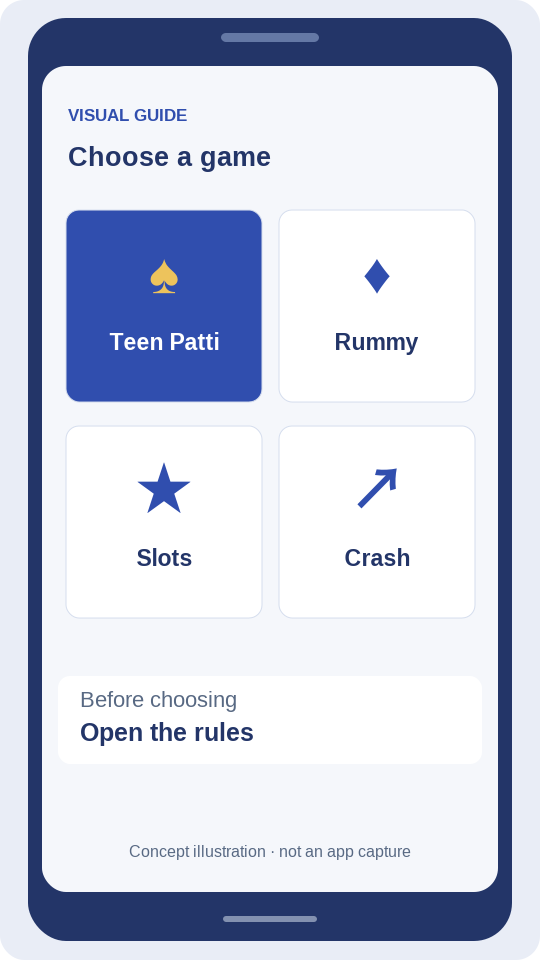
Swipe to see the next illustration.
How to understand Rummy
Identify your groups
Look for consecutive cards of one suit and groups of equal rank. Keep a pure sequence in view.
Draw and discard
Follow the table rules for picking a card and discarding one. Recheck your grouping after every change.
Validate the declaration
A commonly used 13-card ruleset needs at least two sequences, including one pure sequence. The table rules take priority.
Sequences and sets
| Term | Meaning |
|---|---|
| Pure sequence | Consecutive cards of the same suit without using a joker as a substitute. |
| Set | Cards of the same rank, normally in different suits, subject to the rules. |
| Declaration | A claim that the hand meets the required valid grouping. |
Read the suit as well as the number
In a standard example, 5♥ 6♥ 7♥ forms a pure sequence: consecutive ranks of one suit, without a substitute. Three sevens of different suits are a set, not a sequence. 5♥ 6♣ 7♥ is neither of those groups merely because its numbers are consecutive.
Before declaring, review the complete hand rather than just its strongest group. Check the required number of sequences, whether a pure sequence is required, how a printed or wild joker may be used, and the penalty for an invalid declaration. Points, Pool and Deals formats can treat the session differently even when a grouping looks identical.
Common variants and controls
These examples describe the wider game format, not a verified feature list for the linked APK.
Points
A deal is scored in points with a table-defined value. Read penalties and maximum loss first.
Pool
Scores accumulate across deals toward a defined elimination threshold, often named in the rules.
Deals
A fixed set of deals is played with a defined scoring or chip structure.
Before your next round
Check every proposed declaration against the table’s requirements instead of counting only completed-looking groups. A joker can help an impure sequence or set, but usually cannot replace a card in the required pure sequence.
Tables, amounts and timers
| Item | What to check |
|---|---|
| Entry and maximum loss | Read the amount and any fee shown for the selected mode. |
| Time window | Confirm when an action closes; do not infer a timer from a video. |
| Result history | Find the settled record and the reference for a dispute. |
How to evaluate fairness information
The rules should explain how results are generated and settled. Certification or verification claims need evidence tied to the actual product. We have not independently tested the linked APK or verified its random-number generation.
Common mistakes
Mixing suits within a sequence; forgetting the pure sequence; making a declaration before verifying all cards; confusing a variant name with the same scoring across every platform.
Rummy glossary
| Term | Meaning |
|---|---|
| Pure sequence | Consecutive cards of the same suit without using a joker as a substitute. |
| Set | Cards of the same rank, normally in different suits, subject to the rules. |
| Declaration | A claim that the hand meets the required valid grouping. |
Rummy FAQ
Is every three-card group a sequence?
No. A sequence normally requires consecutive ranks of one suit. Three equal ranks form a different kind of group: a set. Check joker and ace rules in the game.
Are all these modes in the APK?
Availability has not been confirmed. Check the installed app before assuming that a variant or control is supported.
Explore more games

Crash
A rising multiplier. One round at a time. Understand cash-out and the point where a round ends.
Rules & essentials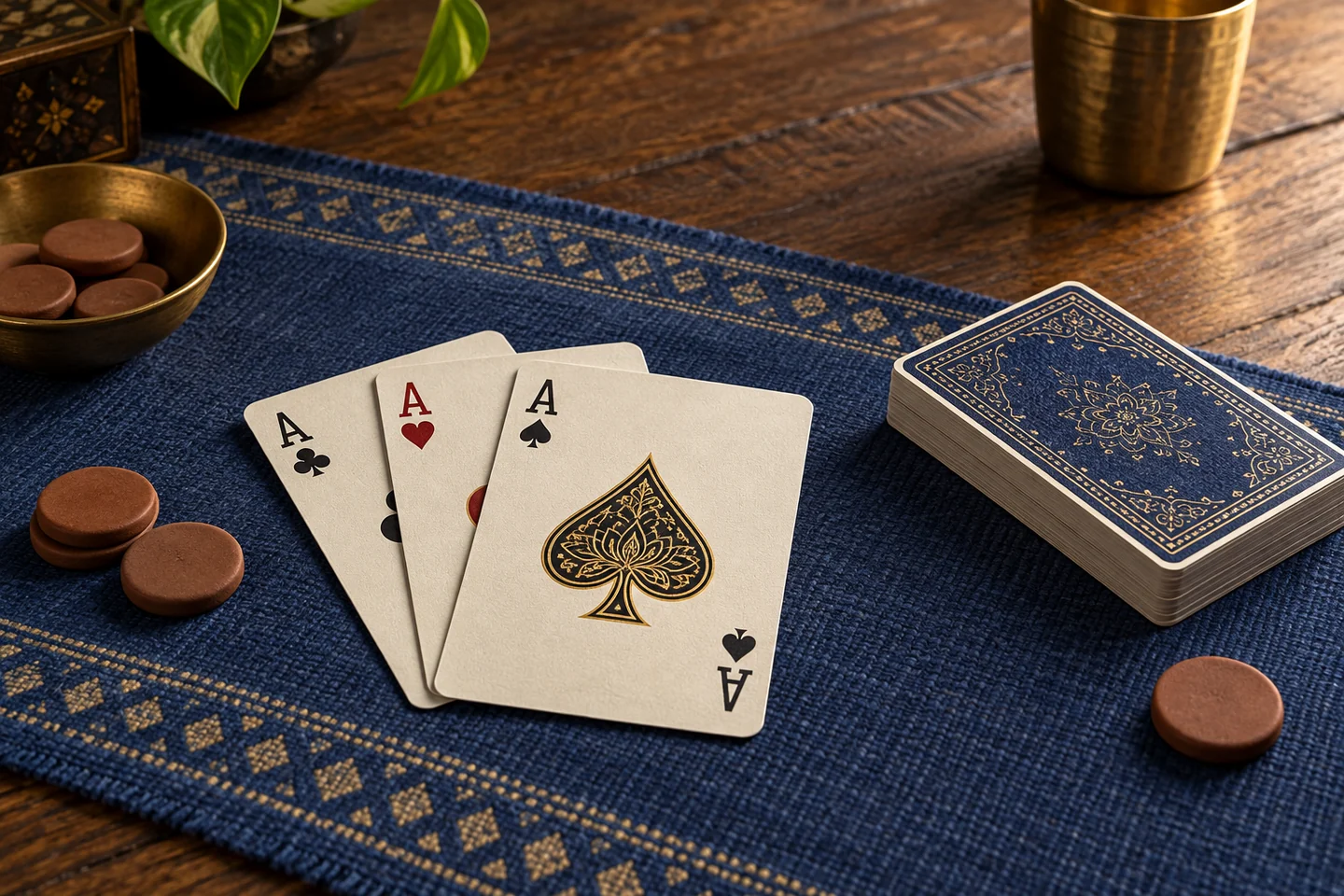
Teen Patti
Get to know three-card rankings, blind and seen play, and the meaning of a show.
Rules & essentials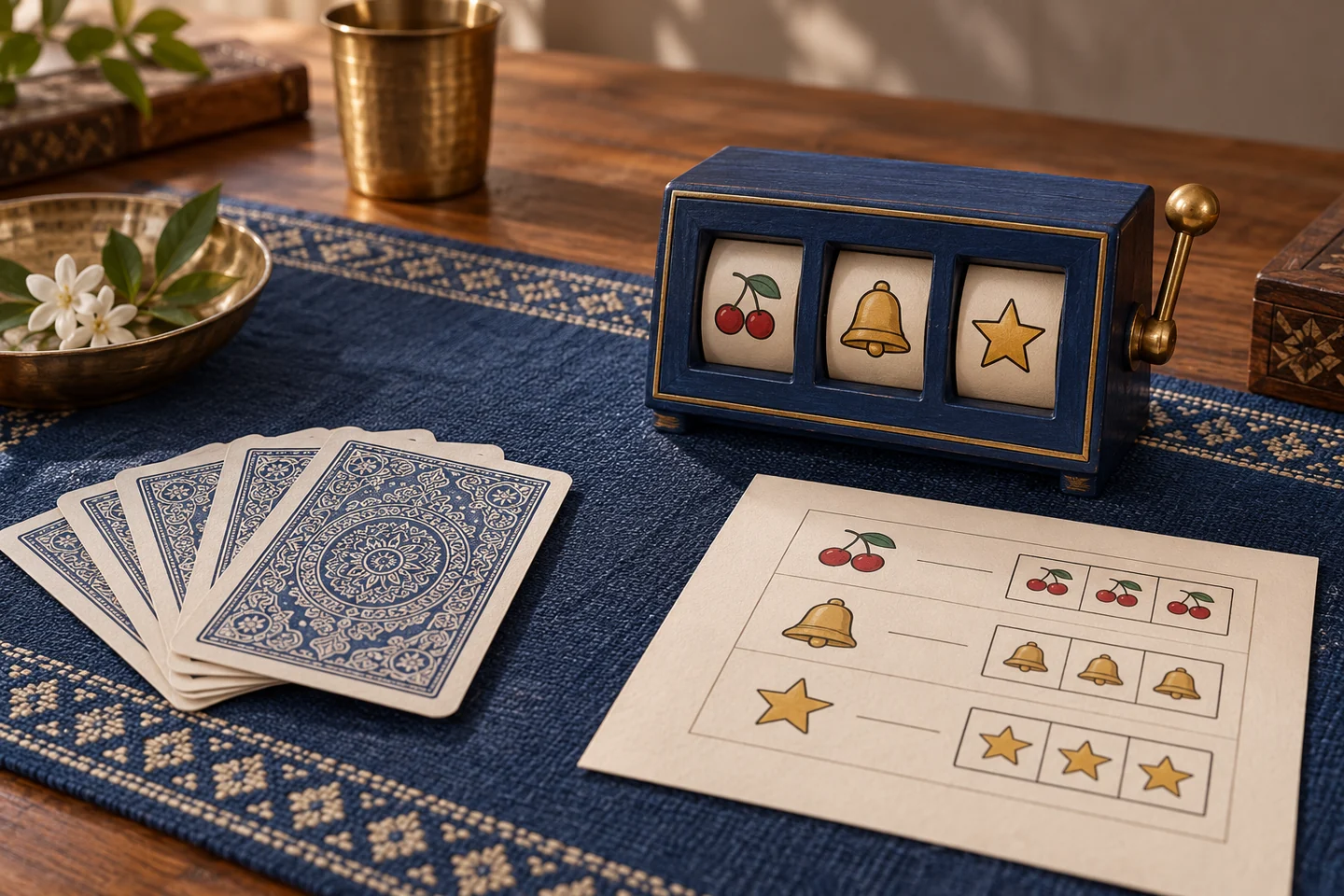
Slots
Read the paytable, understand symbols and distinguish a return figure from a promise.
Rules & essentials