

5 min read

What exactly does the signal claim to predict?
A Crash predictor may promise the next multiplier, a round above a chosen threshold, or a message saying when to enter. Those are different claims. Start by identifying the named game, the particular round and what would count as a correct result. An unexplained green “safe” label is not a measurable prediction, even when it appears beside an impressive chart.
Terms such as AI, live data, hack and premium signals do not answer those questions. Neither does a familiar game logo. A claim needs evidence tied to an identifiable event, available before that event is known. You do not need to subscribe, install an APK or place a bet to notice that a promotion has omitted this basic information.
Verification after a round is not a prediction before it
A fairness checker and a predictor can both display numbers, but their timing matters. Verification uses the inputs made available for a completed result and checks whether the published procedure reproduces it. A prediction claims knowledge before that result is available. A screenshot of a successful retrospective check supports the first activity, not the second.
Stake’s public implementation documentation describes publishing a server-seed hash before play and revealing the seed through its stated rotation process so earlier results can be checked. That is one documented implementation, not a formula for every Crash title. Our provably-fair guide explains the commitment-and-disclosure sequence. A copied verification badge does not establish access to the unrevealed inputs of a future round.
Conceptual timeline. A prediction claim must exist before the round result is known. After the round, the result and the disclosed inputs can be checked against the documented verification procedure, where available. A successful check of a completed round does not provide a prediction of the next round.
Ask what is missing from a screenshot or success rate
Imagine a channel showing six correct calls. If those were the only six calls, that is one record; if they were selected from one hundred calls, it is a very different record. Without the full sequence, you cannot even calculate the observed hit rate. You also need the original publication times and round references to distinguish advance calls from labels added afterwards.
A percentage also needs a definition of success. Calling “below 100×” is not equivalent to naming the exact next multiplier. Even an honestly reported sample is historical evidence and does not guarantee future accuracy. Screenshots, testimonials and paid-group membership counts do not fill those gaps. The table below separates a claim from the information needed to understand it.
Swipe across to see all columns.
| Claim shown | Missing context to check | What it cannot establish alone |
|---|---|---|
| A correct multiplier screenshot | Was the claim recorded before the named round? | Advance access to the result |
| “95% accurate” | Definition of success, sample and all failed calls | Future accuracy or profit |
| A provably-fair verification | Which completed result and disclosed inputs were checked? | A future multiplier |
| An “AI” or “live” badge | What data and specific test support the claim? | Predictive ability |
Recent multipliers do not establish the next outcome
A history strip can establish what the displayed rounds recorded, provided you know which game and period it covers. It cannot by itself establish that a high multiplier is now “due”. Shuffle’s description of its own Crash game explicitly says that free-round results do not predict later paid rounds. That product statement should not be stretched into an unverified audit of every other game.
Our round-history guide focuses on reading existing results and matching them to personal entries. That is useful recordkeeping, but relabelling the same numbers as a signal does not add information about an unrevealed future result. If a seller says a pattern works only after a losing streak, ask whether the displayed record includes all such streaks, not just the examples that ended favourably.
Check what the tool wants from your phone or account
A prediction claim and an app-safety question are separate. A poor prediction claim does not prove that a particular file contains malware; a clean-looking interface does not prove that it is safe. Check the publisher, download source and requested access. A request for account passwords, one-time codes or remote control is not evidence that the software can see future multipliers.
Google advises keeping Play Protect enabled and says it also checks potentially harmful apps from outside Google Play. Do not disable those checks just because a signal seller tells you to. The Android installation checklist explains how to examine a source and file without treating a filename or padlock as a guarantee. This article does not test or endorse any predictor app.
Keep the claim, not just the winning image
If you need to question a promotion, preserve its original wording, source address, visible time and requested payment or permissions. Keep any later edits separate. This is enough to describe what was offered without buying access to collect more examples. Avoid posting account identifiers or private messages containing other people’s details in a public complaint.
The practical conclusion is narrow: a record of a past multiplier, a correct after-the-fact verification and a paid signal are not interchangeable evidence. None should be treated as a promise of the next Crash result. For a genuine question about an existing entry, use its actual game record and official support rather than a third-party prediction channel.
Sources and scope
- Stake — its documented seed commitment and later verification process
- Shuffle — its own Crash game’s explanation of free rounds and later outcomes
- Google Play Help — Play Protect checks and keeping device protection enabled
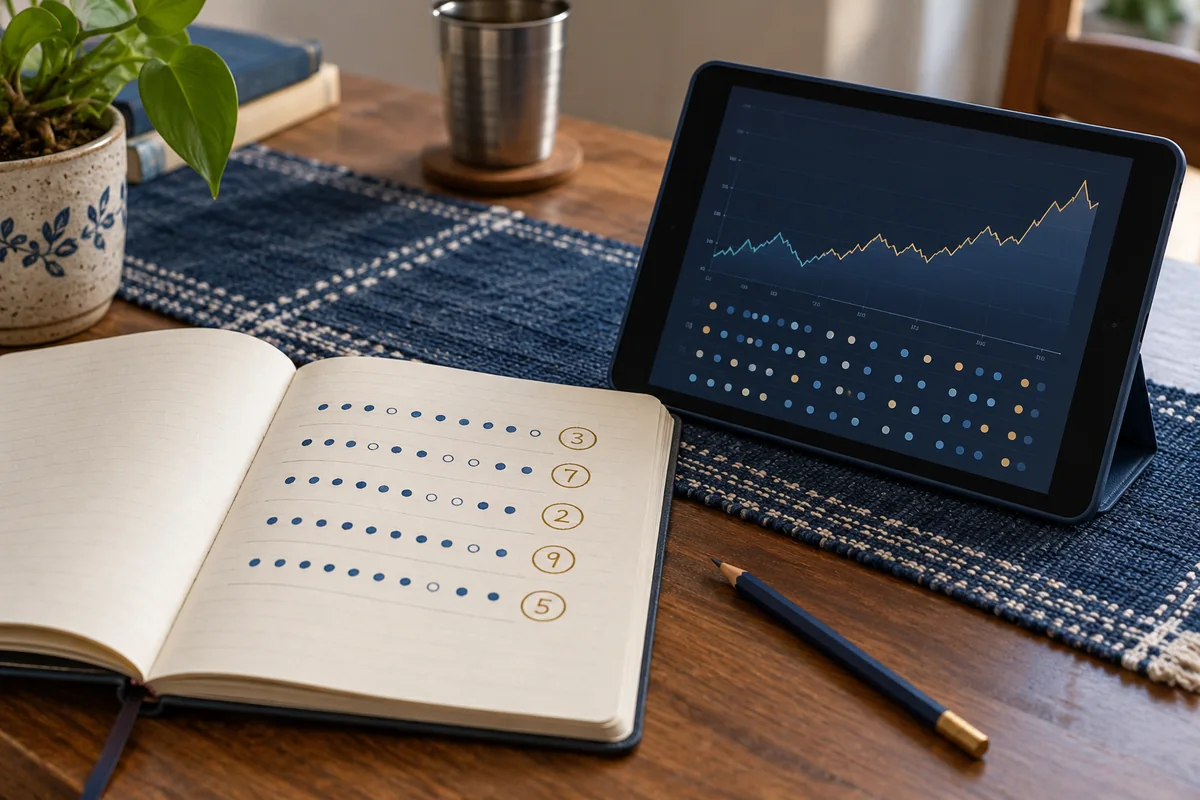
Product-specific controls remain subject to the installed app. Illustrations are explanatory and do not represent measured game results or genuine app screenshots.
How we edit and correct these guides
Quick questions
Is a provably-fair checker a Crash predictor?
No. A checker reproduces a result using the relevant disclosed inputs and rules. That retrospective task is different from knowing an unrevealed result before a round.
Does a high advertised success rate prove a signal works?
Not without the meaning of a successful call, the full sample and independently checkable timing. Even a complete historical sample does not guarantee the next result or a positive net return.
Should I install a predictor to find out if it works?
You can assess whether a claim supplies basic evidence without installing software or paying. Keep device protections enabled and do not share login credentials or one-time codes to unlock alleged predictions.